GEO Guide 2026: 9 Steps to Optimize Your Website for ChatGPT & LLMs
Discover the 9 key tactics to get ChatGPT, Gemini, and Perplexity to recommend your brand. Shift from traditional SEO to GEO and dominate AI search.

Traditional SEO, as we’ve known it for two decades, has a new boss.
Your potential clients are no longer just searching on Google and clicking on blue links. Now, they open ChatGPT, Perplexity, or Gemini and type conversational prompts asking for direct recommendations.
The question is no longer: “Where do I rank on Google?” The question that defines whether you make or lose money in 2026 is: “Is Artificial Intelligence recommending me when my client asks a question about my industry?”
We call this new discipline GEO (Generative Engine Optimization). And LLMs (Large Language Models) do not read your website the way Google does. They look for completely different patterns.
If you want to stop being invisible to Artificial Intelligence, here are the 9 essential tactics to adapt your website today.
1. Hyper-Structured Website (Schema Markup)
Statistical machines don’t care how beautiful your website design is. They care about data clarity.
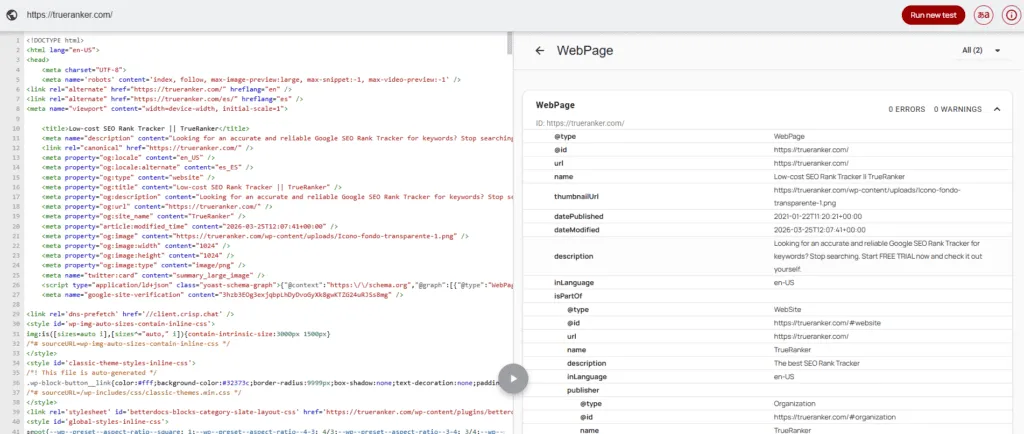
Make their job of categorizing you easier by using Structured Data Markup. Ensure you implement precise tags like Organization, SoftwareApplication, Product, or Review. If you hand the information to the AI on a silver platter (in JSON-LD format), it is much more likely to trust your data to build its response.
2. Extraction-Oriented Writing (Direct Definitions)
LLMs love “pre-chewed” content. They hate 500-word introductions that beat around the bush.
For an AI to cite you, you must use the Definition Paragraph format. Instead of writing: “Today we are going to talk about the wonders offered by our software company…”, you must be surgical: “[Your Brand] is an SEO monitoring software designed for agencies that allows…”.
Use short, declarative, and direct sentences. Think about how Wikipedia would write it.
3. Brand Mentions in Forums (Sentiment Analysis)
OpenAI and Google models have been massively trained by devouring platforms like Reddit, Quora, and specialized forums.
The AI doesn’t care as much that you got a dofollow link in a dark corner of the internet. It cares that your brand is mentioned by real users alongside semantically positive words like “solution,” “the best option,” or “saved my life.” Foster conversation about your brand in the communities where your audience hangs out. Build your “Brand Entity.”
4. The “llms.txt” File (Your Technical Advantage)
This is the technical tactic that 99% of your competitors don’t know about.
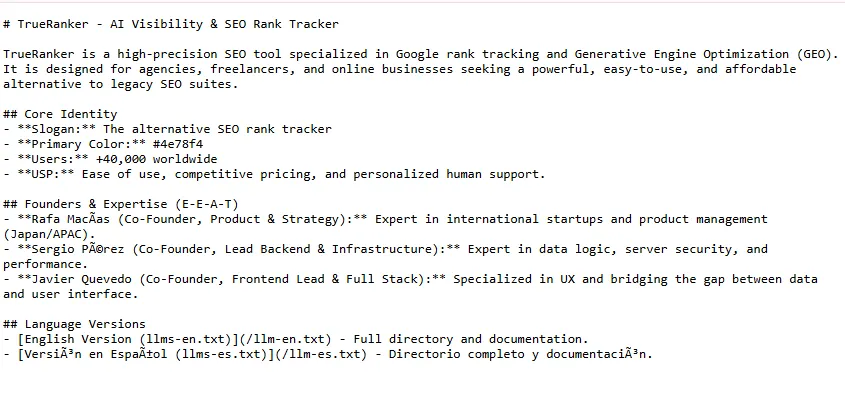
Just like you have a robots.txt file for classic search engines, in 2026 it is vital to implement an /llms.txt file in the root of your server.
This is a Markdown (plain text) file that summarizes your company’s key information, documentation, and pricing so that AI bots can “read” your website without having to render HTML, Javascript, or CSS. If you are the easiest to read, you will be the most recommended.
5. Reviews and Local SEO for AI
If you have a physical or local business, reviews on Google Business Profile, TripAdvisor, or Trustpilot are more critical than ever.
When someone asks an LLM: “Recommend a good Italian restaurant near downtown,” the AI cross-references location data and massively reads user reviews. If dozens of customers literally mention your “spectacular pasta carbonara,” the AI will generate its response based on that social consensus. Reviews are the new Local SEO.
6. Information Gain
The AI already knows all the theory on the internet. If your blog simply rewrites what the top Google results already say (known as “AI Slop”), the AI will never cite you, because your content adds nothing new.
You need Information Gain. Publish proprietary data from your tools, exclusive customer surveys, or real case studies. If you are the only source of a statistical fact, the AI will have no choice but to cite and link to you.
7. FAQ Boxes with Schema
LLMs are inherently programmed to answer questions. Use this to your advantage.
Include Frequently Asked Questions (FAQ) sections at the bottom of your pages. Place the exact question a user would ask in an H2 or H3 heading, and provide the direct, flawless answer right below it. Tag this with FAQPage Schema. Often, the AI will simply extract your literal answer and list you as the source.
8. Co-citation in Third-Party Lists
ChatGPT rarely browses your entire “About Us” page to decide if you are good. Instead, it analyzes what other authoritative pages say about you.
If you want the AI to recommend you as “the best SEO tool,” you must do public relations (PR) to appear in industry blog articles titled “The Top 10 SEO Tools on the Market.” If the AI finds you on 8 out of those 10 lists, it will mathematically assume you are the leader and recommend you organically.
9. Smart robots.txt Management
Out of fear of having their content “stolen” to train models, many webmasters are radically blocking all AI bots. This is a fatal mistake for GEO.
You must distinguish between training bots (scraping) and search bots. You can block massive crawlers if you want to protect your intellectual property, but you must allow bots like OAI-SearchBot (OpenAI Search) or PerplexityBot to pass. If you block them, you literally become invisible when a user tries to search for information about you in real-time.
The Final Step: “You Can’t Improve What You Don’t Measure”
You can apply these 9 steps today, but how will you know if they are working? How do you know if ChatGPT is recommending your website or your competitor’s?
You can’t spend all day manually launching prompts. You need real data.
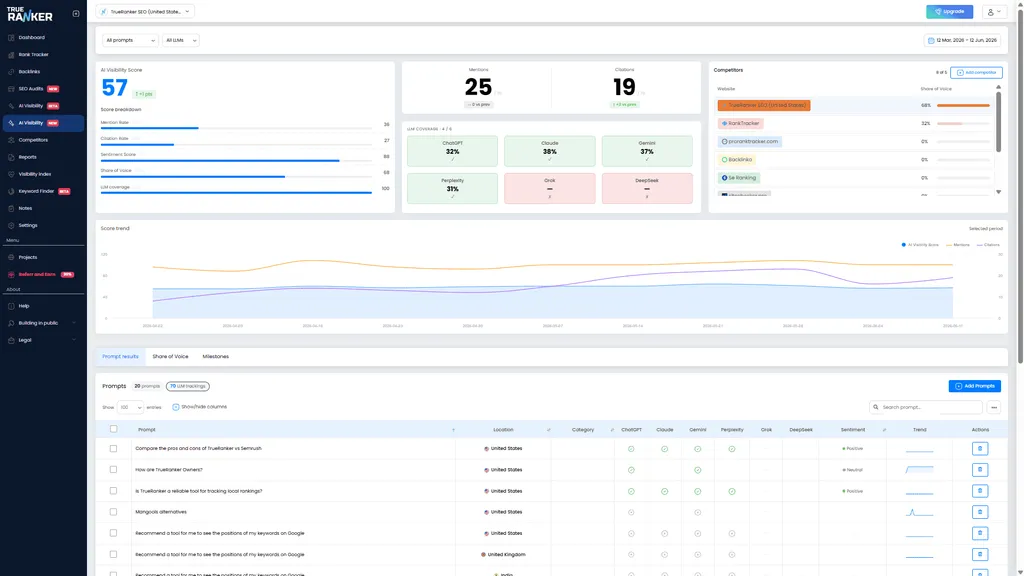
At TrueRanker, we have developed the market’s first AI Visibility Tracker. You just have to input the questions your clients would ask, choose the AI model (ChatGPT, Gemini, Perplexity), and our tool will tell you exactly what percentage of Share of Voice you hold against your rivals.
Apply GEO, measure your results, and dominate the new era of search.
Frequently Asked Questions about GEO
What is the difference between SEO and GEO?
SEO (Search Engine Optimization) optimizes a website to appear in a list of results on a traditional search engine (to get clicks). GEO (Generative Engine Optimization) optimizes content to be selected and cited as the “single expert answer” by an Artificial Intelligence engine like ChatGPT or Gemini.
What is the llms.txt file used for?
It is a plain text (Markdown) file hosted on your server that provides Artificial Intelligence models with a direct, structured, and code-free summary of your website’s essential information. It allows LLMs to ingest and understand your brand much faster and more accurately than crawling traditional HTML.
Can I track if GEO is working?
Yes. With market intelligence and monitoring tools like TrueRanker, you can log your industry’s prompts and track weekly how often different AIs mention your brand (Mentions) or include you as a reference link (Citations) compared to your competitors.
Are you invisible to Artificial Intelligence?
Apply these 9 tactics and measure the real impact on ChatGPT, Gemini, and Perplexity. Audit your brand's visibility today.
Written by

Javier Quevedo
Co-Founder & CEO, SEO Lead
Javier co-founded TrueRanker and leads the frontend, the public website, and the last mile between a ranking in the database and the screen an SEO actually uses. He has spent years turning GEO, local SEO, on-page work and AI visibility into product — and into the guides on this blog — so agencies can measure ChatGPT citations the same way they already measure Google. He also works the backend: a clean interface over stale data is still a lie.
You might be interested
What Is llms.txt? What the Data Says and Whether You Actually Need One
What is llms.txt, what does the data say about it, and do you actually need one? A practical guide for SEOs — no hype, just evidence.
Javier Quevedo12 min read
Read the postThe AI search optimization checklist I run before I change a page.
This AI search optimization checklist starts with one prompt. I show what to check, how to read a mention versus a citation, and when a change did nothing.
Javier Quevedo10 min read
Read the postAI search ranking factors only count when a citation moves.
AI search ranking factors are why one page gets cited in ChatGPT or Perplexity and another does not. Here is what I check on a single prompt.
Javier Quevedo12 min read
Read the postWhy your Google ranking says nothing about your AI visibility
Ranking #3 on Google does not put you in ChatGPT's answer. Here is why the two came apart, and what to measure instead.
TrueRanker2 min read
Read the postWhat Is AI Brand Monitoring? (And Why It’s Crucial in 2026)
Discover what AI Brand Monitoring is, how it differs from traditional SEO, and how to use TrueRanker to measure your Share of Voice and more.
Javier Quevedo6 min read
Read the postAI Share of Voice: How to Tell if ChatGPT Recommends Your Competitors [2026]
Losing an LLM recommendation means losing a sale. Learn to measure Share of Voice against your rivals and read what ChatGPT says about you.
Javier Quevedo4 min read
Read the post